

Western Arctic Watch is a sequence of conversations with individuals who know the Western Arctic—from its landscapes and wildlife to the communities with deep connections to the area. By way of their tales and views, we’ll discover what makes this place so necessary and the way individuals might help preserve it for generations to return.
The Western Arctic is commonly described in sweeping phrases: huge, distant, and seemingly empty. However spend time there, and its complexity can come into focus—a mosaic of distinct landscapes, ample wildlife, and communities with deep, enduring connections to the land. On this first installment of Western Arctic Watch, Robyn Thomas, an Arctic information and hen researcher, talks about what retains drawing her again to the area—and the stunning connections between Arctic birds and other people 1000’s of miles away.
What first introduced you to Alaska’s Arctic, and what has stored you coming again?
“It was 2021 after I first got here up,” Thomas says. She grew up in Colorado doing Colorado issues—floating rivers and enjoying within the snow. However after years working seasonal jobs in Antarctica, on the backside of the world, she took a place learning tundra-nesting birds on the high—the Canning River Delta throughout the Arctic Nationwide Wildlife Refuge.
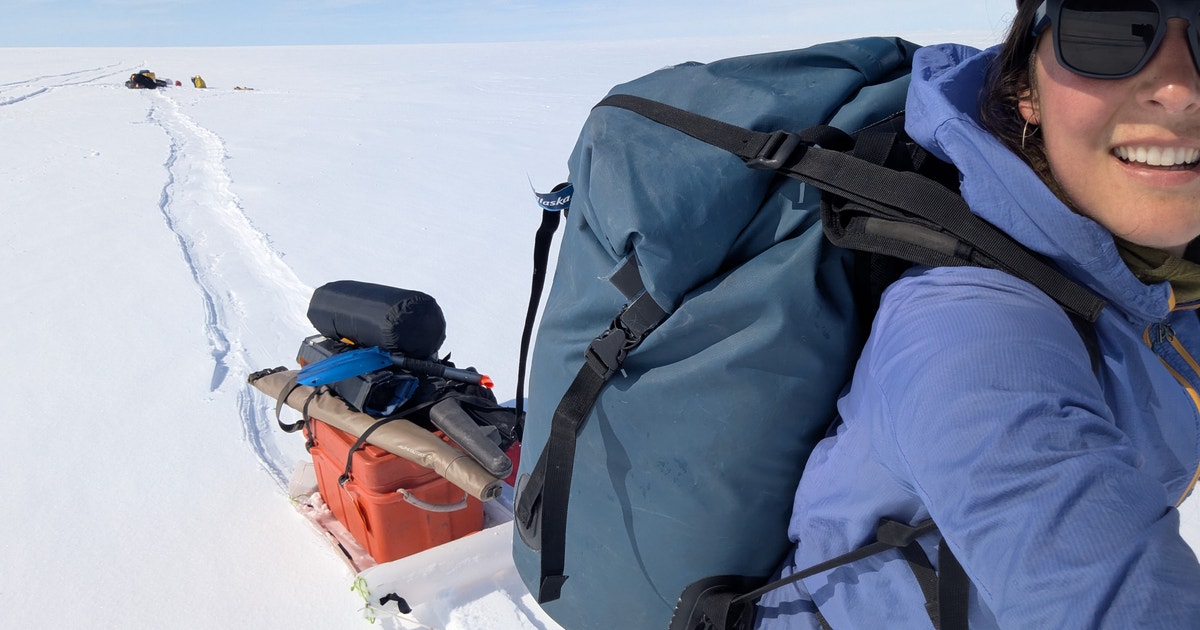
“I simply cherished the panorama and the individuals, and attending to spend that a lot time in a single place, on foot, simply strolling round.” After three summers with the Arctic Nationwide Wildlife Refuge, she made Alaska residence and now resides in Fairbanks. She lately accomplished her grasp’s diploma in wildlife biology, learning birds which can be wintering within the Aleutian Islands. She started guiding with Fairbanks-based Arctic Wild in 2023, which introduced her to many locations within the Western Arctic.
By late spring 2026, Thomas was aiding on a visit to the Teshekpuk Lake Particular Space within the Nationwide Petroleum Reserve–Alaska (NPR–A) with Audubon’s CEO, Elizabeth Grey, Vice President of Audubon’s Alaska Program, David Krause, and conservation photographer Gerrit Vyn. (Test segments from Gray and Vyn within the Fall 2026 concern of Audubon journal about this journey.)
What’s one factor concerning the Western Arctic that most individuals can be shocked to be taught?
For Thomas, it’s the dimensions of this area—a spot the dimensions of Indiana—and the variety inside it. The NPR–A spans 23 million acres, however she says the area can’t be understood as one uniform panorama.
“Considering of the Western Arctic as this monolith is absolutely exhausting for me as a result of it’s so nuanced while you dive into every area,” she says. “I’ve gotten to go quite a lot of locations, and I nonetheless really feel like I’ve simply seen this tiny sliver of it.”
What birds or wildlife do you sit up for seeing while you’re out within the Western Arctic, and why?
Thomas says she doesn’t have one explicit species in thoughts. “I’m a fairly avid birder, and something new to me is at all times thrilling,” she says. However she particularly loves the power of spring, when migratory birds arrive and put together to breed. “Simply feeling that and seeing the entire birds, no matter they’re, in that context is absolutely particular for me.”
However for her, it’s seeing the acquainted species that may provide one thing new. Recognizing a White-crowned Sparrow within the Arctic, she says, “regardless that I’ve seen it so many instances, is at all times particular.”
What modifications have you ever observed within the Arctic, and the way do they have an effect on your work as a information and researcher?
Thomas is cautious to not overstate what she’s noticed in only a handful of seasons. However pilots she works with have observed modifications, and he or she has seen indicators of oil exploration and infrastructure from the air and on the bottom, particularly seismic exploration automobile tracks, which might depart lasting impressions within the tundra.
“These indents make water work together with the panorama in a method that’s totally different than it could usually accumulate or drain,” she says. “It’s quite a lot of that harm I see as fairly everlasting and disruptive, which is absolutely unlucky.”
What do you would like extra individuals understood concerning the Western Arctic, and what can individuals do to be taught extra about it?
Thomas says the Arctic is just too typically portrayed as empty, overlooking the wildlife and, importantly, the individuals that decision it residence. She encourages individuals to hunt out tales and views from communities within the Western Arctic and keep knowledgeable about selections affecting the area.
“Folks can submit feedback and phone their representatives and positively assist organizations which can be working to guard the Western Arctic,” she says. “You don’t should stay in Alaska, or have been to the Western Arctic, to have a voice in what occurs up there.”
A Cackling Goose monitoring challenge gives one instance of simply how related individuals are to the area. Thomas was concerned in a analysis challenge that used monitoring units to be taught which cackling geese traveled alongside the Pacific Flyway and which used the Central Flyway. When she adopted one particular person’s location information, she acknowledged the place it had gone for the winter: her personal highschool soccer subject again in Colorado.
“I stored zooming in and zooming in on this goose’s location, and I used to be like, ‘Are you kidding me?’” she says. “This hen simply spent its entire summer time in one of many wildest locations, and now there are all these highschool youngsters operating round it within the fall having soccer follow.”
For Thomas, this instance illustrates a a lot greater connection: Individuals are continually seeing or interacting with birds from Western Alaska.
“You see a hen in your yard or at your native park, and you haven’t any thought the place it got here from or the place it’s going,” she says, “However you should utilize your creativeness. Consider all of the issues it’s seen, and all of the far-flung locations it’s traveled and frolicked. And now it’s proper in entrance of you.”
This connection, it’s taking place throughout us.
Bonus: A Information to Zippers, too
Thomas’s zipper-repair experience may need begun with a stitching machine inherited from her grandmother many years in the past, but it surely actually took off in Antarctica. The station she labored at was on a volcanic island, and he or she observed that volcanic grit was entering into individuals’s zippers and sporting them down quicker than regular. “All these volcanic fines had been getting in individuals’s zippers and simply chewing them up from the within,” she says. With so many zippers failing, she had loads of gadgets to follow on and discovered to exchange zipper sliders and set up new zippers on coats, luggage, and tents—generally in seconds.
In the present day, she carries a restore package wherever she goes and has amassed a powerful assortment of zipper components. Her philosophy? “I am not making an attempt to purchase new stuff, and I do not need different individuals to have to purchase new stuff if it is only one half that must be changed.”
And sure, she’s booked stable.
