

When the leaves begin to fall, and the colourful colours of the summer season start to fade, winter birding takes heart stage.
Feeding the birds is a practice for a lot of, particularly as shorter days and colder temperatures pull folks inside. With fewer leaves on the bushes and scarcer assets making it simpler to note the return of favourite wintering birds, it’s no marvel that recording sightings at feeders is a seasonal spotlight for a lot of birders.
Neighborhood science tasks, like Audubon’s Christmas Bird Count (CBC), Climate Watch, and Project FeederWatch give birders a possibility to remodel their observations into significant information. Lengthy-term information collected by group science contributors on the bottom offered historic large-scale inhabitants information that helped scientists discover that since 1970 now we have misplaced nearly 3 billion birds
In Central Ohio, the 2 Audubon Facilities, Aullwood Audubon in Dayton, and the Grange Insurance Audubon Center in Columbus are working to encourage the following era of conservationists whereas creating welcoming areas for native birders to assemble and contribute to science.
Aullwood Audubon
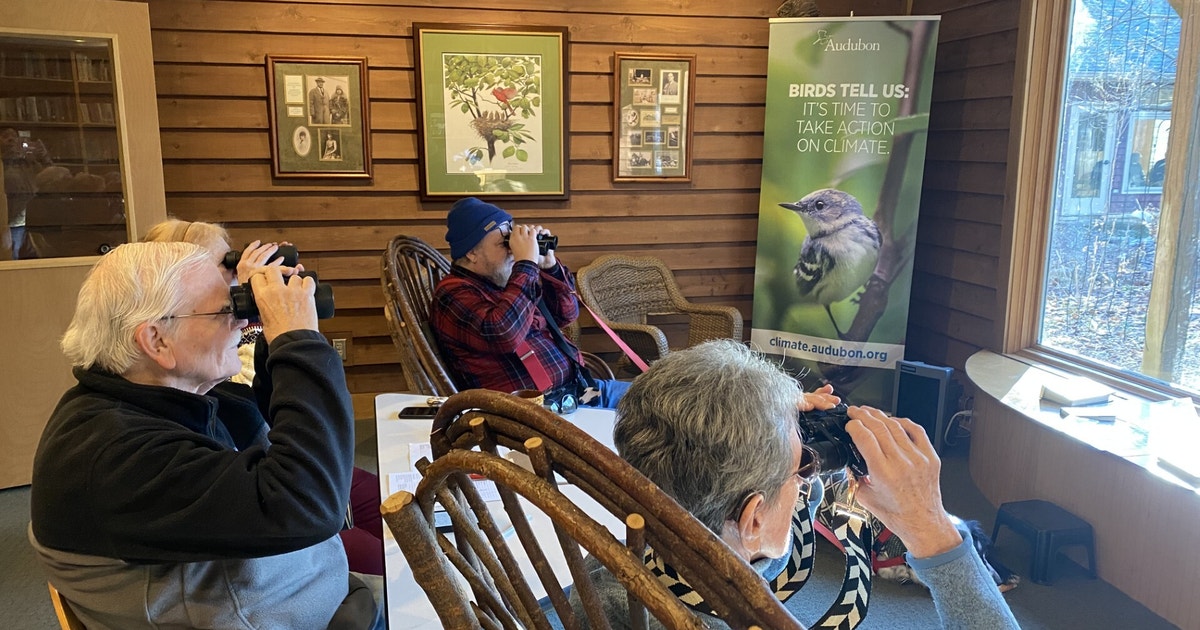
In Dayton, OH, Aullwood Audubon has a historical past of main group commentary efforts. This would be the heart’s 27 season of collaborating in Challenge FeederWatch. The middle has hosted over 260 counts and has noticed a complete of 48 totally different species.
“Challenge FeederWatch and different group science packages are enjoyable and thrilling methods to study extra in regards to the birds and nature proper exterior your window,” shared Environmental Educator, Sam Romeo.
Romeo has labored as an Environmental Educator on the heart for greater than a decade. “By observing and counting birds, contributors develop into half of a bigger scientific effort whereas growing a deeper connection to the pure world round them.”
Darkish-eyed Juncos, Northern Cardinals, and Downy Woodpeckers are common guests, however generally the affected person onlookers are rewarded with a daring Pileated Woodpecker. The joys of seeing the big chicken rising from the forest to land merely ft away from observers is sufficient to maintain them coming again 12 months after 12 months. Two years in the past, throughout a FeederWatch session, contributors have been fortunate sufficient to identify a uncommon leucistic Northern Cardinal.
“What makes occasions like Challenge FeederWatch particularly significant is the chance to assemble with others and listen to their tales. I like listening to how folks first turned excited by birds, listening to childhood reminiscences spent outdoor, and studying in regards to the moments in nature that modified their lives for the higher,” exclaimed Romeo when requested what group science means to him. “These private connections remind us that birding is about greater than gathering information; it’s about curiosity, group, and the experiences that encourage us to look after the pure world.”
In the course of the summer season months, Aullwood Audubon holds a daily butterfly survey, serving to so as to add to the info on native insect species that noticed within the space. Curious about getting concerned? Company can join an upcoming FeederWatch session. Aullwood waives admission for the day as a thanks to individuals who take part within the depend.
Grange Insurance coverage Audubon
In Columbus, OH, a bunch of 12 fourth graders encompass a window overlooking the Scioto Audubon Metro Park. There may be tangible pleasure within the room as the scholars maintain clipboards like treasures near their chests. One pupil whispers, “look, it’s a Home Finch,” and everybody pushes nearer to the window to get a greater take a look at the finch flashed with brilliant crimson plumage.
From the opposite aspect of the room one other pupil excitedly breaks the quiet stress, “I see a Track Sparrow!” This can be a new species for the scholars, and the room erupts with pleasure as the category strikes to try to get the most effective vantage level. After confirming that it’s a Track Sparrow from the dot on its chest, the scholars dutifully report their depend on their worksheets.
These college students are part of the Grange Insurance coverage Audubon’s Conservation Classroom program, and they’re performing their very own model of Challenge FeederWatch.
A whiteboard within the heart’s library shows photos and the names of widespread winter birds that the scholars could spot on the feeders. Their instructor can be engrossed within the depend, serving to her college students inform the variations between a feminine Northern Cardinal and a Home Sparrow, “take a look at her beak,” the instructor kindly notes to a curious pupil.
They’re studying about variations, speciation, sample recognition, and the names of the birds that encompass them within the city setting of downtown Columbus. Anne Gagnon, Grange Insurance coverage Audubon Heart’s Senior Affiliate of Stewardship, has been main Conservation Classroom courses for the final 4 years.
“Challenge FeederWatch days current the chance to spark a pupil’s curiosity in nature,” shared Gagnon. “Birds are such an neglected element of the atmosphere, nearly to the purpose of desensitization. Coaching college students to be chicken observers helps them join with the marvel of the pure world.
After the scholars pack again into the varsity bus, Gagnon will evaluation the info from the two-day depend, guaranteeing that the biggest variety of people seen concurrently turns into the ultimate tally that’s submitted to the FeederWatch database. The observations her college students report contribute to a long time’ value of information, turning their pleasure into significant scientific contributions.
Every Bird Counts
From lifelong birders to fourth-grade students experiencing the excitement of identifying a new species for the first time, both Aullwood Audubon and the Grange Insurance Audubon Center are helping people connect with birds and the habitats they depend on. Through community science programs like Project FeederWatch, participants are doing more than collecting data. They are building relationships, sharing stories, and becoming part of a larger conservation community.
This holiday season, we hope you find the time to celebrate with the birds and to record your findings with the community!
Whether gathered around a classroom window in downtown Columbus or settled into a rocking chair overlooking feeders at Aullwood, participants discovered that every observation matters. The birds they count today contribute to decades of scientific research, helping us better understand how birds are responding to environmental change and informing conservation efforts across North America.
