

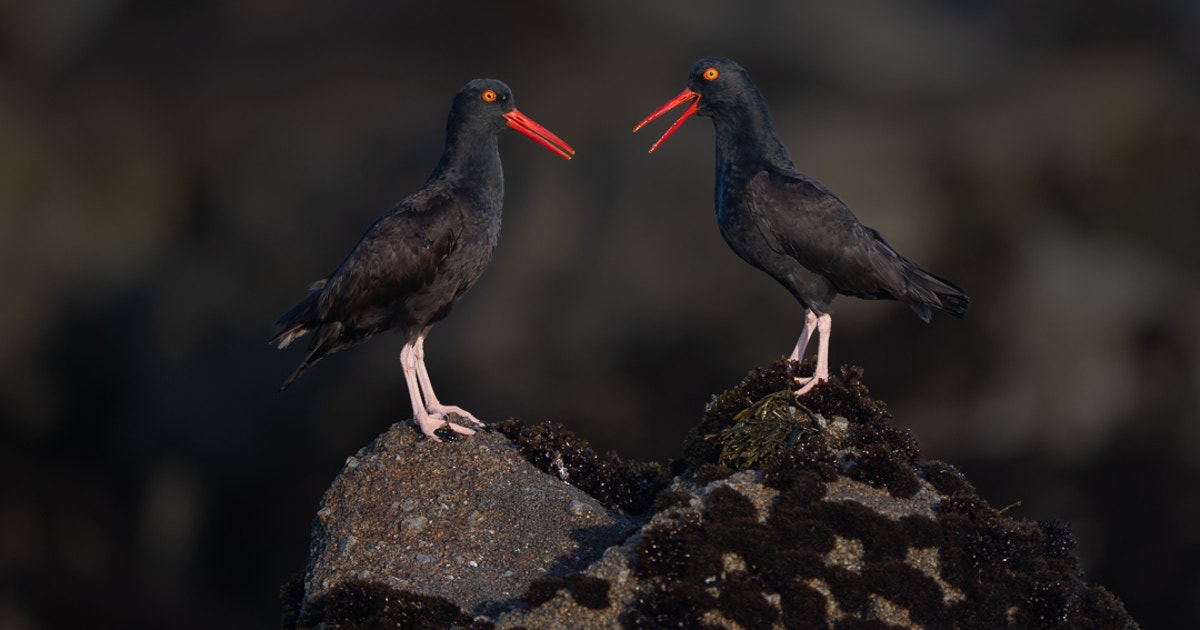
Local weather-threatened Black Oystercatchers do not simply love the coast. They love a specific stretch of coastal habitat, from Alaska to Baja California. This “rocky intertidal” habitat they rely upon helps a worldwide inhabitants of simply 12,000-17,000 birds.
Because of the slim band of habitat they use for foraging, nesting, and roosting, these oystercatchers are particularly susceptible to rising sea ranges and stronger storms that threaten the slim stretch of rocky shoreline.
Audubon California’s Dan Orr, Director of Geospatial Science, not too long ago contributed to the Central Coast Regional Report, part of California’s Fifth Climate Change Assessment. I requested him what a altering coast might imply for Black Oystercatchers and the way volunteers’ observations might help scientists monitor these modifications and inform conservation efforts. Discover our Q&A under.
How might local weather change have an effect on what Black Oystercatchers eat?
Marine heatwaves can have an effect on how a lot meals is obtainable throughout nesting season, when adults are feeding chicks.
Ocean acidification poses one other problem. Some shellfish could have a tougher time constructing and sustaining their shells in additional acidic waters, and larvae could also be particularly susceptible. So, this might imply a discount within the variety of mussels, crabs, and limpets that these birds depend on.
Can the birds look elsewhere for meals?
Sure, however that poses separate challenges round disturbance. Think about a pair elevating chicks or guarding their nest on a rocky outcrop. If meals is harder to seek out close by, the Black Oystercatcher dad and mom may spend extra time looking out or attempt feeding someplace new—which takes extra power and will increase the time their nests or chicks are left unattended, in danger for predation by pure predators.
Is there something volunteers can do to assist Black Oystercatchers?
Group science platforms like eBird and iNaturalist let volunteer observers share sightings that may assist researchers monitor modifications over time.
It’s additionally price retaining monitor of visits if you don’t see Black Oystercatchers, particularly at websites the place they have been as soon as widespread. Submitting a whole guidelines from all visits helps researchers see the place the birds have been detected and the place observers appeared however didn’t discover them to detect modifications.
How does monitoring these observations assist conservation efforts?
We have already began seeing Black Oystercatchers begin utilizing alternate nesting areas, like piers and jetties.
If observations present that birds recurrently use an space to relaxation, forage, or nest throughout vital occasions like nesting season, coastal managers might take into account giving them extra space with a short lived roped-off space. (Audubon chapters already assist with comparable efforts to observe birds and cut back disturbance.)
How does monitoring by Audubon chapters and volunteers advance the science?
An earlier Audubon-led study drew on a decade of nest monitoring in California and Oregon. By bringing collectively observations from many areas of the coast, researchers discovered a sample that may have been exhausting to detect at anyone web site. This helped reveal Black Oystercatchers with increased nesting success farther north.
Continued monitoring might help scientists monitor whether or not nesting success and different behavioral modifications change over time and the place these modifications are occurring.
Group scientists from Mendocino Coast Audubon, Madrone Audubon, Golden Gate Chicken Alliance, Marin Audubon, and Monterey Audubon helped accumulate the info, alongside California State Parks volunteers in San Luis Obispo County and Chicken Alliance and Audubon volunteers alongside the Oregon coast.
Monitoring alongside the coast additionally provides volunteers an opportunity to share what they’re seeing. Whereas surveying nests, volunteers launched hundreds of coastal guests to Black Oystercatchers and the rocky shores they name dwelling. These conversations might help construct neighborhood help for shielding birds and strengthening local weather resilience.
Get Concerned This Winter | December 14, 2026 – January 5, 2027
Join a Christmas Bird Count (CBC) alongside the coast! For greater than a century, the Audubon CBC has introduced collectively hundreds of volunteers throughout the Americas to rely birds for conservation. Use Audubon’s CBC Circle Finder to discover a coastal rely.
Birders of all expertise ranges are welcome! Participation is coordinated by means of native circle leaders who information volunteers by means of this significant custom. First-timers are sometimes paired with skilled counters.
