

The Platte River is a big, dynamic system, and defending it takes greater than anyone group can do alone. Throughout the Platte River Basin, conservation companions work by a layered community of partnerships, every bringing completely different experience, sources, and views to the desk. Collectively, these partnerships make sure that precedence habitats are protected, the wants of wildlife and persons are thought-about, and conservation efforts attain the locations the place they’re wanted most.
Audubon has been serving to construct and lead these partnerships for greater than 50 years. By way of our rising Platte River Initiative, we’re working to strengthen connections throughout the Basin and advance a shared imaginative and prescient for a resilient river. That is vital as a result of the Platte would not simply maintain birds and wildlife – it additionally helps the communities, economies, and livelihoods which have grown up alongside it.
Constructing a Presence on the Platte
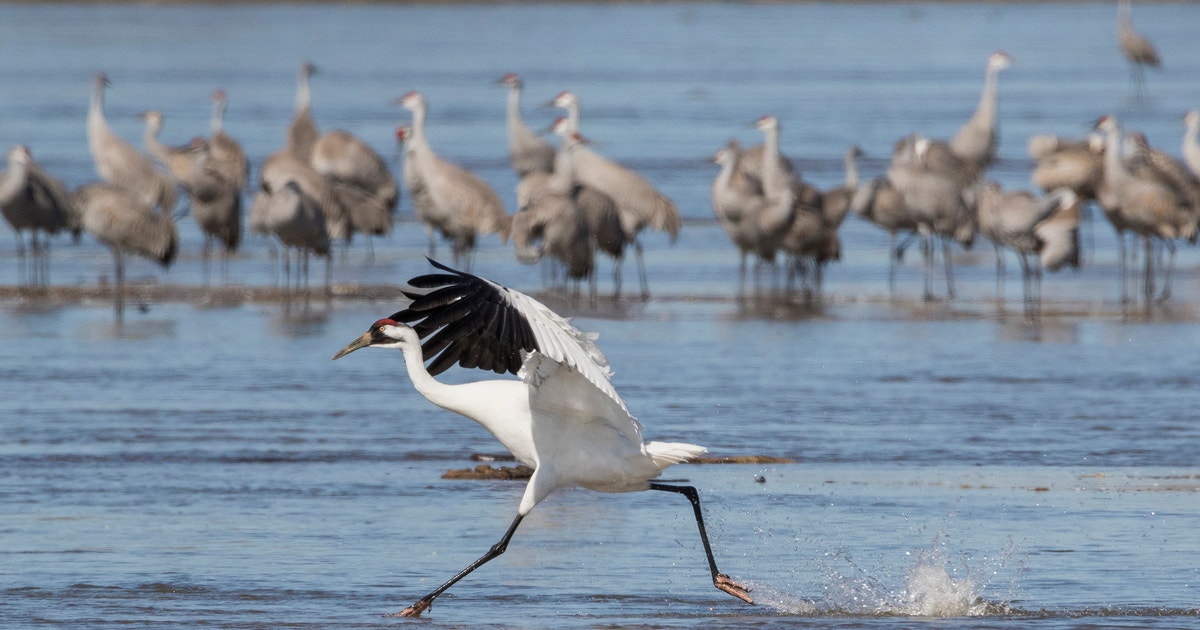
Audubon’s story on the Platte started within the 1970’s with the acquisition of land alongside the river close to Gibbon, Nebraska. From this foothold, Audubon helped deliver nationwide consideration to one of many world’s most outstanding pure spectacles: the annual spring migration of Sandhill Cranes by the Central Platte. We additionally helped shine a lightweight on the plight of the endangered Whooping Crane, a species that will depend on the Platte as a vital stopover on its migratory path crossing hundreds of miles.
With the passage of the Endangered Species Act within the Seventies, parts of the Central Platte have been designated as important habitat for Whooping Cranes, however many years of water growth and altering river flows had taken a toll. Decreased streamflow contributed to narrower river channels, fewer wetlands and sloughs, and the unfold of invasive vegetation that stabilized sandbars that after shifted throughout the river. These modifications made it more durable for cranes and different wildlife to seek out the open river habitat and meals sources they want.
Recognizing that water is the inspiration of the Platte River ecosystem, Audubon grew to become a number one voice in efforts to guard the river, together with authorized challenges geared toward stopping additional reductions in streamflow. With out sufficient water, the river cannot perform because the dynamic, life-supporting system that birds, wildlife, and folks depend upon.
Discovering Widespread Floor
For many years, conversations concerning the Platte usually performed out alongside acquainted dividing strains: conservation pursuits on one aspect and water customers on the opposite. But by the 1990’s, the challenges facing the river made it increasingly clear to Audubon and others that nobody could solve these problems alone. After nearly a century of constructing canals and diversions on the Platte River, extra authorized water rights had been allotted than the river may reliably provide. Reservoirs and agreements amongst irrigators and energy producers helped handle restricted provides, however in dry years, some water customers nonetheless got here up brief, as did lots of the river’s native species.
On the identical time, Endangered Species Act necessities meant that new water growth initiatives may face prolonged and costly federal opinions due to their potential impacts on Whooping Crane habitat. It grew to become clear {that a} zero-sum method wasn’t working and collaboration started to seem like a greater path ahead. Water customers, conservation organizations, state companies, and federal companions started searching for methods to mix their sources and experience so {that a} wholesome river and a wholesome financial system did not need to be competing targets.
Turning Partnership into Progress
One of many notable examples of this shift was the creation of the Platte River Recovery Implementation Program (PRRIP) in 2007. Audubon participated in almost a decade of negotiations that introduced collectively Wyoming, Colorado, Nebraska, water customers, environmental pursuits, and the federal authorities to ascertain a shared method to Platte River conservation. PRRIP’s principal targets are enhancing and sustaining water provides, restoring hundreds of acres of habitat alongside the Central Platte, and utilizing adaptive administration to study what works in a continuously altering pure system. Audubon has been concerned because the starting and continues to serve on PRRIP’s Governance Committee and quite a few subcommittees.
Over the previous 20 years, PRRIP has introduced important sources and companions collectively to enhance habitat for endangered and threatened species, together with Whooping Cranes, Piping Plovers, and Inside Least Terns. Simply as importantly, it has created a spot the place individuals with completely different pursuits could make selections collectively and work towards shared targets.
In 2019, Audubon and different companions expanded this collaborative method by launching VESPR (Imaginative and prescient for an Ecologically Sound Platte River). Whereas PRRIP has a particular give attention to species protected beneath the Endangered Species Act, the Platte helps many different birds, fish, wildlife, and habitat sorts that additionally deserve consideration. VESPR brings collectively conservation organizations, college researchers, and state and federal wildlife companies to coordinate analysis, determine priorities, and put conservation initiatives into motion. Coordinated by Audubon, it offers a versatile discussion board the place companions can pool workers and funding, share data, and suppose past particular person initiatives towards the long-term well being of the complete riverscape.
A Broader Imaginative and prescient for the Platte
The Platte River would not cease at state strains, and neither ought to the advantages of our conservation efforts. Selections about water, habitat administration, and pure sources in a single a part of the Basin can have impacts far upstream or downstream. As local weather change and different pressures deliver new uncertainty to the Platte’s water provide, habitats, and wildlife, sturdy partnerships shall be extra vital than ever.
That’s the reason Audubon’s Platte River Initiative is working to attach companions throughout the complete Basin, bringing high-quality knowledge into decision-making, and serving to communities perceive how at this time’s decisions form tomorrow’s river. By way of our increasing community of collaborators, Audubon continues to strengthen the ecological resiliency upon which the social and economic well-being of communities throughout the Platte can develop.
