

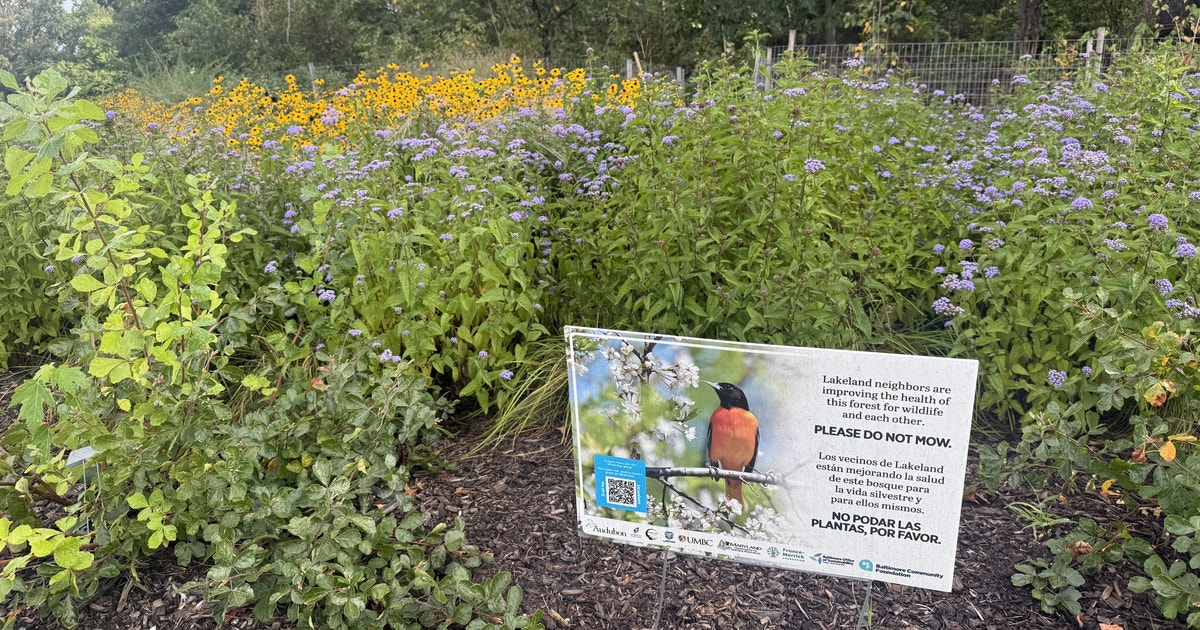
A forest in southwest Baltimore has a brand new lease on life because of a partnership between Audubon, Baltimore Metropolis Recreation and Parks, and the Lakeland neighborhood.
Audubon wrapped up restoration work at Lakeland Park this fall, reworking an overgrown, difficult-to-access forest right into a welcoming oasis for birds and residents. The undertaking has been years within the making and concerned in-depth neighborhood engagement, intensive invasive plant elimination, forest and path restoration, and extra.
The work marks the primary accomplished undertaking beneath the Baltimore Neighborhood Forestry Initiative, a collaboration between Audubon and Baltimore Metropolis Division of Recreation and Parks, which goals to enhance forest habitat for migratory birds whereas working with neighboring communities to create more healthy, extra accessible inexperienced areas.
“Migratory birds have few wholesome habitats to relaxation and refuel as they migrate alongside the East Coast, significantly the densely populated Mid-Atlantic area,” mentioned Susie Creamer, Baltimore Program Director at Audubon Mid-Atlantic. “Co-created by design, the Baltimore Neighborhood Forestry Initiative contributes to Audubon’s habitat objectives, restoring stopovers for migratory birds whereas additionally assembly our companions’ objectives of wholesome forests and safer entry for park guests.”
Neighborhood Course of
Earlier than the Initiative launched, Lakeland Park’s forest was troublesome to entry, with aggressive invasive vegetation like English ivy and Japanese honeysuckle smothering native vegetation and blocking trails. On account of perceptions of neglect by the Metropolis, unlawful dumping had taken a toll on the panorama.
This started to vary in 2024, when Audubon partnered with Baltimore Metropolis Recreation and Parks and launched Lakeland Park as a pilot web site for the Baltimore Neighborhood Forestry Initiative. Step one was partaking the neighborhood to learn the way residents needed to see their park remodeled.
By quite a few neighborhood conferences, residents gave enter to form the undertaking’s design. They requested for wider, extra accessible strolling paths, bilingual interpretative signage, and benches for guests to relaxation and luxuriate in nature. Neighbors additionally helped to pick native timber, shrubs, and wildflower species to enhance biodiversity and beautify the park.
Later that 12 months, restoration work started. Crews eliminated invasive vegetation, cleared practically 2,000 kilos of trash, and reopened trails. Because of funding secured by Audubon, in spring of 2025, the group planted greater than 200 timber and shrubs, together with 1,100 perennial native vegetation, filling in gaps alongside the forest edge and inside.
Rec and Parks’ Trails group widened paths, cleared particles, and put in steps made out of reclaimed metropolis timber. Inexperienced Stewards, a bunch of neighborhood members educated by Audubon and Rec and Parks in native plant identification, invasive species elimination, tree planting, and lightweight path work, supported enhancements alongside the forest trails. The Metropolis’s Camp Small, which recycles useless wooden from native forests, created 4 massive, wood benches from fallen timber, per the request of park neighbors who aren’t bodily in a position to stroll the size of the path with out breaks.
Restoration and Neighborhood
The restoration additionally introduced neighbors collectively. Led by Audubon and Inexperienced Stewards, tons of of Lakeland residents participated in planting occasions, alongside college students from Lakeland Elementary/Center Faculty.
Addressing unlawful dumping and bettering entry have been additionally necessary components of the trouble, and Rec and Parks groups are actively working to take away dumping and stop future points. Moreover, Audubon’s Baltimore group labored carefully with Rec and Parks to design bilingual, interpretive signage to share the significance of wholesome forests and make the park extra welcoming.
The result’s a park forest that was re-envisioned by and is open to its neighbors.
For Lakeland resident and Baltimore Inexperienced Steward, Lidia Mencho, the park transformation has been lengthy awaited.
“The place the park was beforehand empty, it’s now crammed with life, with timber, offering this area for our neighborhood,” Mencho mentioned. “Households, youngsters of all ages have been in a position to present their enter on what this park ought to develop into. It’s surreal to take a seat right here, contact this bench, and know that we contributed to it. It’s very particular.”
One of many clearest indicators of change she noticed is that youngsters now ask to go to the park. “The park is now the vacation spot that they search out,” Mencho mentioned. “They need to be right here, and it’s a protected place for them. Earlier than, this was not the case.”
Migratory Habitat
Forests like Lakeland play an necessary position in supporting each migratory and resident birds. Alongside the I-95 hall, dense, main cities akin to Washington DC, Baltimore, Philadelphia, and New York create an intensely developed panorama. For birds touring alongside the East Coast, inexperienced areas inside these cities are necessary relaxation areas, offering meals to refuel throughout migration.
Mature timber present nesting areas and shelter for resident birds, whereas native shrubs and flowering perennials supply meals and habitat for migrating species. A more healthy forest is very necessary as a result of it helps the bugs that the majority birds have to survive.
“These smaller forested areas function stepping stones between the biggest parks, and that’s actually crucial stopover habitat for wildlife that’s shifting from area to area,” mentioned Ashley Bowers, Pure Areas Unit Supervisor of the Baltimore Metropolis Dept. of Recreation and Parks.
By native plantings, improved forest well being, and long-term upkeep and monitoring, the Baltimore Neighborhood Forestry Initiative helps guarantee these inexperienced areas stay helpful for wildlife whereas providing residents alternatives to attach with nature.
Audubon and Baltimore Metropolis Rec and Parks at the moment are replicating the success of the Initiative in a second web site, Farring Baybrook Park, which incorporates 17 acres of forest inside a 91-acre public park. Keep tuned for extra on how this initiative is reworking city habitat for birds and communities.
