

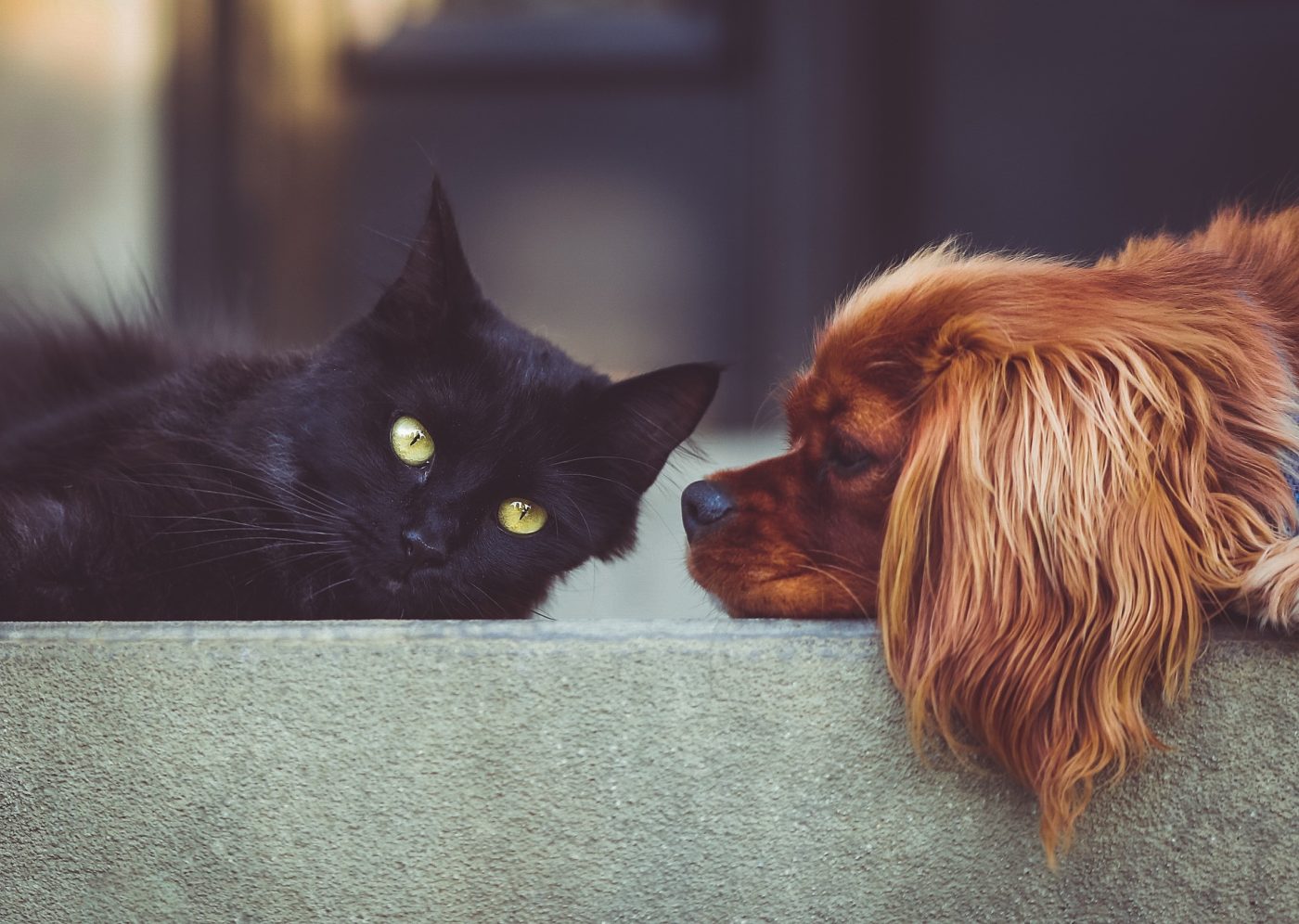
After we are younger, we study loads of dangerous knowledge that appears to originate from elements unknown. For instance, we study that the concept of cats and canine getting alongside is de facto unusual. Assume again to these Saturday morning cartoons, the place canine would all the time be seen as a cat’s mortal enemy.
After all, we develop out of many of those sorts of concepts, although, surprisingly, the cat vs. canine situation persists in a single type or one other. Even Hollywood bought in on the act with the favored Cats & Canine film franchise.
All of this begs the query: Why do canine hate cats? To be truthful, the query is considerably deceptive. Maybe a extra poignant query may be: Do canine truly hate cats in any respect? Let’s take a better look and clarify why we now have this notion and why it is a bit extra sophisticated than simply liking and hating issues.
Certainly, their perceived battle has extra to do with us and our properties than cats and canine themselves. Here is why:
Why Do Canine Hate Cats? 4 Elements to Contemplate
1. Are Canine and Cats Pure Enemies?
Of their wild type, animals from the canine and cat households are predators and scavengers. They aren’t identified to predate upon one another, although, so they aren’t enemies in that sense.
Nevertheless, they may be seen as in competitors for meals and sources. They have an inclination to remain usually away from one another within the wild, apart from to compete for that meals.
The home canine and cats we all know at the moment additionally initially grew to become domesticated individually and in numerous areas from one another. That mentioned, they may nonetheless be seen as in competitors for meals and our affections. The latter even has people divided, it appears.

2. Barely Totally different Origins & Relationships
After they grew to become domesticated, cats and canine developed a roughly comparable relationship with people. That’s to say; each realized that hanging round people was a simple strategy to keep fed and preserve heat.
Nevertheless, canine tended to be extra tailored to work or a minimum of help with day by day residing. They could shepherd livestock, shield items or help with the hunt. Some canine had been purely ornamental, in fact.
Most cats, nevertheless, weren’t actually adaptable to work apart from to help with vermin management. The intuition to chase and kill small animals got here in useful when rats and mice had been current in early properties.

3. Behavioral Language Variations
Cats and canine talk in very other ways. And this will account for why they did not all the time see eye to eye when their worlds collided in human properties. The completely different species could nicely have encountered one another and found an animal that simply acted bizarre.
Consider it like this: You get up in your house to search out an alien in your bed room, taking a look at you as in case you are in its bed room. You don’t have any thought what it may be saying or doing, and all you see is that this unusual being in your area. How would you react? Seemingly both fearfully or aggressively. That explains lots about why some cats and canine appear to hate one another.

Let us take a look at some examples of what may go improper:
Cat Behaviors
These are some typical cat behaviors you could observe:
–Cats purr to sign that they’re calm and comfortable, and even content material. They’re even identified to do this when they’re making an attempt to assuage people or maybe heal themselves.
-Cat meows are purely invented for human communication. We do not know what they’re saying more often than not, however they understand it brings consideration and outcomes.
-When cats wag, shake or twitch their tails, it would imply they’re irritated or aggressive.
-Cats run solely when they’re very playful, scared, or combating.
-A typical cat greeting includes approaching the opposite cat head to head. The tail can be straight and upright. If a cat is calm and non-aggressive, it could gently smell the opposite cat’s face and slowly blink its eyes.

Canine Behaviors
Against this, these behaviors in comparable conditions are clearly completely different.
-A canine doesn’t purr and has no equal. If it hears a cat purr, it could even interpret it as growling. In canine, growling is an aggressive sound and signifies a potential battle.
-Whereas cats meow at people for all types of causes, canine will principally bark at people in aggravating or aggressive conditions. Even when finished whereas in play, the scenario is usually high-energy and should invite aggression.
-A waggy tail implies that a canine is comfortable or, on the very least, excited.
-Except particularly educated to assault, a operating canine is a cheerful canine. It is the favored method of play and appears to remind them of nice occasions in open fields!
-When canine meet, they keep away from eye contact. They run round one another, scent one another’s ears, and usually have waggly tails in the event that they’re feeling non-aggressive.
It is pretty simple to see how even these most simple behaviors may cause confusion if one expects the opposite to behave as they might. A rambunctious canine operating as much as a cat with large slobbery slurps can be met with alarm and an aggressive response out of concern.
Equally, a suspiciously gradual method from a wierd cat could elevate pink flags for a canine who’s nervous by nature.

4. Studying to Dwell Collectively
Essentially the most battle between cats and canine tends to occur if you find yourself coping with grownup animals. In reality, cats and canine which might be raised collectively and socialize accordingly can get alongside completely nicely.
One other issue is breed. Sure kinds of canine (German Shepherds, for instance) are simply that a lot simpler to coach, and a few cats will merely not thoughts different pets within the dwelling. Then it is right down to the person animal, who could or could not carry specific experiences and points that make issues tough round different animals.
For instance, a cat or canine that had a nasty expertise with its reverse could carry a traumatic memory and react badly to a scenario the place they’re confronted with a set off.

Should you’re planning to have each cats and canine, there are some things you would possibly think about:
Undertake them on the identical time, as a pet and kitten, respectively. Younger animals are much less more likely to act aggressively in direction of each other. Greater than that, they’ll get used to the scent and conduct of the opposite early on, making it a norm.
-A cat will want loads of area through which it’s past the attain of the canine. So present plenty of excessive areas like cat bushes or cat walks round your own home. Even after they do get alongside, a cat can be extra obliged to take a seat at a secure top and observe.
-Separate feeding areas. In some circumstances, the way in which a canine acts round meals could also be distressing for a cat. Cats prefer to be calm and picked up when consuming. Some canine get actually excited.
-Pay attention to possession antics, particularly you probably have a toy or lap canine. Cats additionally prefer to cuddle or sit on you, and if there’s solely considered one of you round, it could end in aggression over who will get to take a seat the place.
-Some canine have very robust prey instincts (as do cats). Their predilection for chasing small issues could make them unsuitable for all times with a cat. If, after targeted coaching, your canine continues to aggressively “hunt” your cat (or vice-versa), you could must rethink the pairing.

Last Ideas on Why Canine Hate Cats
You’ll be able to infer from the above that “hate” is a robust phrase on the subject of canine and cats. The conflicts extra probably come up from unfamiliarity and miscommunication, which intensifies anxieties over meals and area.
Socialization, coaching, and care can actually go a protracted strategy to making your cat really feel extra comfortable with the canine. It’s nicely value spending a while on this to make sure a happier pet all-around.


Amanda created and owns The Discerning Cat. A lifelong cat lover she is the proud mother or father of two Siberian cats, Alexei and Vladimir. She is keen about understanding cats and completely different cat breeds.
