

Arizona has varied water provides that assist habitat, communities, trade, agriculture, and our lifestyle. Groundwater makes up 41 % of the state’s provide, adopted by Colorado River water at roughly 36 %, in-state rivers (just like the Salt and Verde Rivers) at 18 %, and reclaimed water (purified wastewater) at 5 %.
In lots of communities, floor (river) water will not be out there, so groundwater is commonly the one supply of water. As Colorado River water provides shrink, the state will turn out to be more and more reliant on different sources, like groundwater. Because of this we should shield and maximize all our water sources—and the infrastructure that gives, captures, strikes, and purifies that water.
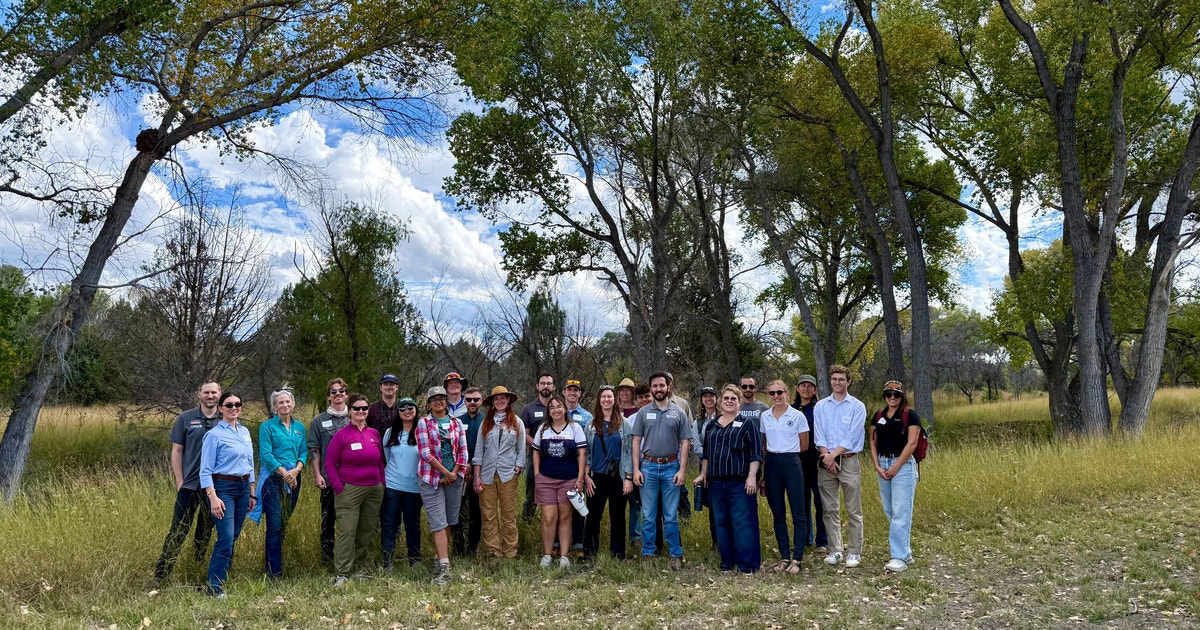
To enhance our understanding of what municipalities and organizations are doing to make water provides extra resilient, Audubon and companions went to southern Arizona to view water initiatives on the bottom.
Eradicating contaminants from groundwater in Tucson
An aquifer is a layer of sand, gravel, or permeable rock the place water collects underground. When rainfall, streamflow, or melting snow sinks into the bottom, the groundwater recharges naturally into the aquifer. To guard groundwater sources in southern Arizona, it’s important to guard the aquifer.
Which took us to the primary cease of our tour, Tucson Water’s Tucson Airport Remediation Project. This facility was initially constructed in 1994, to scrub up a portion of Tucson’s groundwater, which had been designated a superfund site because of contamination by trichloroethylene (TCE) and 1,4 dioxane chemical substances from army exercise within the Nineteen Forties to the Nineteen Seventies close to what’s now the Tucson Worldwide Airport. The power additionally helps shield the aquifer and stop the motion of TCE into Tucson’s central wellfield (the place Tucson Water pumps clear groundwater to serve it to clients).
In 2022, the Arizona Division of Environmental High quality (ADEQ) awarded Tucson Water $25 million with funding from the American Rescue Plan Act to enhance remedy of one other contaminant within the groundwater: per- and polyfluoroalkyl substances (PFAS). Development for this portion of the Tucson Airport Remediation Challenge was accomplished in September 2026. These facility upgrades will assist cut back operation and upkeep prices, take away PFAS, permit the Superior Oxidation Course of to satisfy its initially meant function of treating for TCE and 1,4-dioxane, and improve the general remedy capability of the plant. Handled water from the venture is added to the reclaimed water system and used for irrigating parks and golf programs. A small portion of the handled water can also be discharged into the Santa Cruz River, the place it helps riparian habitat alongside Tucson’s “The Loop” bike path.
Strategies to revive landscapes and put money into pure infrastructure
Watersheds are land areas that seize rain and snowmelt and drain into rivers, lakes, and streams. In Southern Arizona, wholesome grassland landscapes and watersheds permit rain to soak into the soil, recharge the aquifer, and assist native habitat. When these landscapes degrade and the plant cowl is misplaced, the naked soil has much less capability to absorb the water, forcing it to run off, eroding dust and sediment. This may create incisions, or downcutting on the panorama. These incisions (additionally known as head cuts) can slowly increase and transfer upstream, disconnecting the land from the underground water desk or floodplain, which may negatively affect habitat and water provides.
Land managers make the most of low-tech process-based restoration methods to rehabilitate degraded landscapes and watersheds. Low-tech process-based restoration entails developing easy, non-mechanical buildings to reestablish pure hydrological capabilities and finally reconnect the floodplain—the floor water with the groundwater.
We heard from the Watershed Administration Group about pure infrastructure initiatives they’re tackling alongside the Decrease Babocomari River (which flows into the San Pedro River) with funding from the U.S. Fish and Wildlife Service, Arizona Division of Environmental High quality, The Nature Conservancy, and different non-governmental organizations.
Alongside the Decrease Babocomari River, Watershed Administration Group and volunteers put in post-assisted log buildings, a low-tech process-based restoration method. These buildings gradual the circulate of water, permitting the panorama to soak up the water and soak into the bottom. It additionally reduces erosion as a result of sediment can unfold out as a substitute of speeding downstream. This helps restore a more healthy, extra resilient river system the place native crops may be reestablished as nicely.
Our final cease of the day took us to The Nature Conservancy’s Canelo Hills Cienega Protect, a 260-acre nature sanctuary southeast of Sonoita, neighboring Audubon’s Appleton-Whittell Research Ranch. The Nature Conservancy manages the protect to guard and restore the spring-fed wetland, also called a cienega. Whereas cienegas make up a small proportion of the southern Arizona panorama, this distinctive ecosystem supplies important habitat for varied sorts of wildlife, together with threatened and endangered species. This explicit cienega is house to the uncommon and endangered Canelo Hills ladies’-tresses orchid (Spiranthes delitescens).).
To boost the habitat for this uncommon flower, fireplace is crucial. Fireplace has a vital operate in grassland ecosystems as a result of it controls the encroachment of woody plant species and minimizes the buildup of thatch—the dry vegetation that densely accumulates protecting the soil stopping development of recent crops. Traditionally, the protect’s habitat burned each 5 to 10 years. However after 20 years with out fireplace disturbance, the quantity of gas had reached an unhealthy stage.
With funding and coordination from the U.S. Fish and Wildlife Service, U.S. Forest Service, Bureau of Land Administration, Nationwide Park Service, The Nature Conservancy, Desert Botanical Backyard, and personal landowners, a useful prescribed burn was rigorously executed in January 2025 to clear lifeless grass and encroaching timber. The prescribed burn finally opened up habitat, unfold vitamins, protected the cienega’s spring water, and lowered the gas load that might result in catastrophic wildfire.
The Nature Conservancy and Desert Botanical backyard will proceed to observe the affect of the burn on the land, water, and the Canelo Hills women’-tresses orchid. Just lately, a flowering orchid was discovered on web site (for the primary time in 15 years).
In one other part of the protect, tour individuals heard from Ryan Golb, Restoration Specialist with Borderlands Restoration Community, a few pure infrastructure venture that reduces erosion and retains water and moisture on the panorama.
Borderlands Restoration Community utilized native supplies (riprap rocks, bigger stones, and logs) to create erosion management buildings to enhance the operate of a usually-dry wash—in order that when water does circulate from storm occasions, the buildings assist divert water away from the close by roadway, retaining the water within the wash alongside timber and shrubs. This prevents flooding on the highway whereas rehydrating soil and crops and lowering the pressure of water throughout storms. Ryan defined there’s proof these buildings are working: “You possibly can see the place the water is flowing primarily based on the place it deposits particles because it slows down. It is a key indication that our buildings are working the best way we would like.”
To enhance the resilience of our landscapes and water provides, we should proceed to put money into varied sorts of infrastructure initiatives. As evidenced by this tour, many various methods assist shield and stretch our water provides and rehabilitate landscapes, habitat, and aquifers. With the numerous rainfall that hit the southwest within the fall of 2026, it’s all the extra necessary to put money into our landscapes and infrastructure, to replenish our reservoirs, recharge aquifers, and rehabilitate habitat. In Southern Arizona, funding from native, state, federal, philanthropic, and company companions, in addition to cross-sector collaboration, proves important to carry initiatives to fruition and make an affect for communities on the bottom.
