

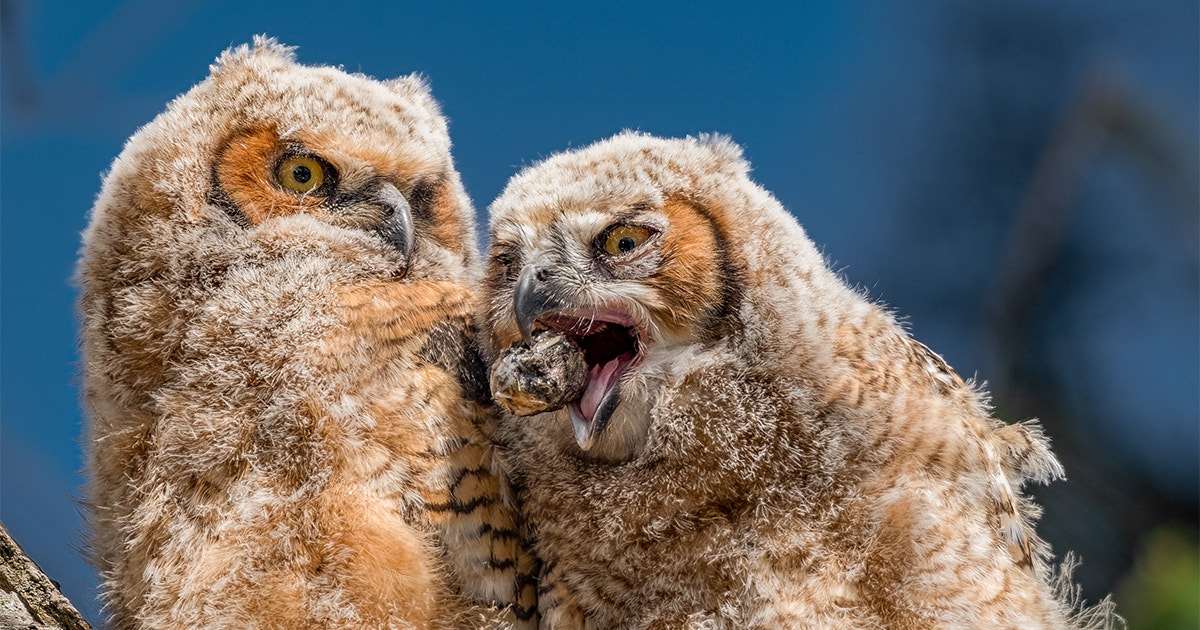
When most individuals discover a small brown nugget within the woods, they assume it’s animal poop. It may very well be, but it surely additionally is perhaps an owl pellet: a mass of bone, fur, and feathers that the owl couldn’t digest and as an alternative expelled from its mouth. These leftover bits of prey can injury or sluggish the owl’s digestive course of, so as an alternative of making an attempt to interrupt down the additional schmutz with their abdomen acids, owls package deal the waste into neat pellets that may be effectively upchucked from the physique.
Owl pellets are oval-shaped objects that may range in measurement, from as small as an almond to as giant as a hen egg. In addition they vary in shade, showing darkish grayish-brown to a dingy off-white relying on the species and what the owl final consumed. Not like poop, owl pellets sometimes have a matted, furry texture that may be studded with bones. When you discover an owl pellet, take a cautious (and quiet) go searching you: There could also be an owl roosting close by—and even proper above you.
Learn on to find how pellets kind, what they maintain inside, and find out how to inform owl pellets from owl poop.
Poop, Vomit, or One thing Else?
Owl pellets don’t qualify as poop for one easy purpose: They’re regurgitated, not defecated. Whereas owls kind pellets to do away with indigestible components of prey, additionally they poop similar to all different birds. In truth, an owl’s precise poop is straightforward to tell apart from pellets: It’s a whitish, chalk-like, drippy Rorschach blot that appears nothing just like the stable, self-contained, dark-colored mass of a pellet.
Pellets are telltale indicators of owl exercise, however don’t disregard owl poop, both.
Pellets are telltale indicators of owl exercise, however don’t disregard owl poop, both. Contemporary white scat alongside the trunk of or beneath a coniferous tree may additionally point out that an owl is nestled into the branches overhead. When you have encountered an owl roost, then you may even see each owl pellets and owl poop. The stable, dry, fur-and-bone chunks on the bottom are the pellets; the runny, black-speckled, white splashes on the tree and floor, are the scat.
Owl pellets are additionally distinct from owl vomit—though each come out the identical finish. Vomiting is an unplanned reflex that’s triggered when the hen turns into ailing; vomiting solely happens when one thing is incorrect with an owl. Owls don’t vomit steadily, so you’re unlikely to come back throughout it within the wild. In contrast, owls solid
How Owls Kind Pellets: Two Stomachs, One Job
An owl pellet types by means of the digestive processes of an owl’s two abdomen chambers: the proventriculus and the gizzard. This is what occurs from beak to, effectively, beak once more:
- After the owl consumes its prey, the meal passes by means of the hen’s esophagus and into its proventriculus (often known as its glandular abdomen).
- Within the proventriculus, digestive enzymes and acids break down the prey merchandise’s mushy, nutritious innards. Bones, fur, and different powerful supplies with little dietary worth are left untouched.
- The meals slurry flows to the owl’s gizzard (technically a “muscular abdomen”), the place muscular tissues crush and squeeze the undigested items right into a stable unit. Consider the gizzard as a trash compactor.
- Round 6 to 10 hours after the owl consumed its prey, the hen pushes the pellet again up from its gizzard and out by means of its beak. The liquid leftovers of the owl’s prey make their means by means of the hen’s intestines and are available out the cloaca as poop.
Why do owls kind pellets when many different hen species
An owl’s pellet supplies a glance contained in the hen’s place within the meals net.
What’s Truly Inside an Owl Pellet: Bones, Fur, and Feathers
An owl pellet comprises all the things that the owl couldn’t digest. Fur is a mainstay, forming the grayish, furry exterior that provides pellets their attribute matted texture. Wrapped inside the fluff is an assortment of small bones that may embrace a cranium, jawbones, ribs, and leg bones. By rigorously inspecting the particular construction of those bones, it may be attainable to determine what the owl final ate. For instance, a cranium with rows of red-tipped, triangle-shaped enamel belonged to a shrew. A rodent (comparable to a mouse) would have a cranium with pronounced, crescent-shaped incisors. Relying on the owl and its dietary preferences, the pellet may additionally include a couple of feathers or insect fragments.
Not Simply Owls: How Pellets Evaluate Throughout Owl and Different Chicken Species
Not all pellets are created equally. Barn Owl pellets are dense, darkish, and easy, whereas Nice Horned Owls produce loosely packed, brittle gray-colored pellets with bones visibly jutting out from the edges. Together with owls, birds like hawks, herons, and even swallows spit up pellets as effectively, though discovering a pellet belonging to a different hen is rare.
| American Barn Owl | Dense, darkish, and self-contained with few bones seen by means of easy exterior |
| Great Horned Owl | Unfastened, grey, and brittle with giant, apparent bones extruding from sides |
| Screech-Owl | Small, darkish, and tightly packed, with few bones and extra items of insect exoskeletons |
| Red-tailed Hawk | Giant, dense, and darkish, composed virtually fully of fur with few bones |
| American Herring Gull | Giant and diverse, typically studded with items of shells and sometimes stuffed with plastic |
| American Crow | Extraordinarily variable, doubtlessly stuffed with components of seeds, berries, leaves, crustaceans, mammals, or different gadgets |
Discovering (and Dissecting) an Owl Pellet Your self
The place to Discover Owl Pellets
The most effective place to seek out owl pellets is beneath a roost or nest field (throughout the nonbreeding season). Barn Owls steadily roost inside outdated barns and silos, making these wonderful locations to seek out pellets. Different species favor to sleep in dense stands of coniferous bushes. Whereas it’s attainable to come across particular person pellets, a group of pellets in a small space is an efficient indication that there’s a dependable roost shut by.
By no means go close to an energetic owl nest.
When you strategy a recognized or suspected roost to hunt for owl pellets, be very cautious to not disturb sleeping owls, and by no means go close to an energetic owl nest. Additionally necessary: Contemporary pellets can carry harmful micro organism and different pathogens, so all the time decide them up whereas sporting gloves.
A Secure At-Residence or Classroom Dissection Challenge
Since freshly collected owl pellets can include pathogens that make individuals sick, be sure that you sterilize any pellet you collected from the wild by wrapping it in aluminum foil and baking it. Fortuitously, pre-packaged pellets sold for classroom use have already been sterilized.
When dissecting an owl pellet, make sure you put on disposable gloves and work in a clear atmosphere. Use instruments like tweezers or a toothpick to softly tease aside the fur and pull out the bones. Place the bones off to the facet, and attempt to hold bones that had been clustered contained in the pellet along with each other to reconstruct the skeleton.
FAQs About Owl Pellets
Q: Are owl pellets the identical factor as owl poop?
No. Owl pellets are oval-shaped, dense objects composed of the indigestible components of an owl’s prey which are expelled from the mouth. Owl poop is whitish and splattery, simply mistaken for the poop of different birds.
Q: How lengthy does it take for an owl pellet to kind?
About 6 to 10 hours. Owls will sometimes hunt for and eat their prey in forests or fields earlier than returning every morning to the identical roost website in a well-covered location, the place they may regurgitate the pellet.
Q: Do all owls produce pellets?
Sure. There may be important variation between the pellets produced by completely different species, with Barn Owls producing denser, darker, and smoother pellets than the porous, grayish, fluffy pellets of a Nice Horned Owl. Barn Owl pellets are mostly utilized in classroom settings, as their roosts are very dependable and their pellets maintain collectively effectively.
Q: What number of pellets do owls produce every day?
Owls typically solid one or two pellets per day.
Q: Are owls the one birds that produce pellets?
No. A variety of birds, together with hawks, herons, gulls, shorebirds, shrikes, and crows additionally regurgitate pellets. These pellets seem barely completely different from owl pellets as a result of the opposite birds eat completely different diets.
Q: Why do owls produce pellets when another birds don’t?
Owls swallow their prey complete with none chewing or different mechanical breaking, so they have to deal with bigger chunks getting into their digestive techniques. Owls even have weaker abdomen acids than another birds do, so they’re unable to interrupt by means of the bones and fur of their animal prey. Birds with extra acidic stomachs or smaller and gentler prey (comparable to small, easy-to-digest bugs) have little have to kind and expel pellets.
