

NEW LONDON, WISC. (October 21, 2026) — Bouressa Household Farm, owned and operated by fifth-generation farmer Rachel Bouressa, has earned the Nationwide Audubon Society’s Fowl-Pleasant Land Certification. Achieved via Audubon’s Conservation Ranching program, this certification acknowledges Bouressa’s efforts to reinforce grassland ecosystems for birds and different wildlife in central Wisconsin.
Audubon Conservation Ranching is a science-based conservation program that helps birds, biodiversity, and resilient working lands via partnerships with farmers and ranchers. Since 1970, grassland birds in North America have skilled the largest population declines throughout all terrestrial biomes, largely on account of pressures from habitat loss and degradation, woody encroachment, and intensive chemical use. To assist reverse these declines, Audubon works instantly with landowners to develop habitat administration plans, put bird-friendly practices on the bottom, monitor birds and habitat, and assist safe funding for conservation enhancements—all whereas maintaining these lands productive and dealing in grass-based agriculture.
In the present day, greater than 160 farms and ranches throughout 15 states have earned Audubon Conservation Ranching’s certification, bringing round 4.7 million acres below bird-friendly land administration. In Wisconsin, this system has expanded to 2,000 acres throughout seven certified farms. These producers meet rigorous requirements for environmental sustainability, habitat administration, and animal welfare, all confirmed via a third-party audit.
Wisconsin’s newly licensed Bouressa Family Farm was initially a dairy that Rachel Bouressa’s dad and mom ran for 18 years. Within the Nineteen Nineties, her dad and mom transitioned to managed grazing with dairy cows on their land close to New London. After a catastrophic barn hearth in 2014, Bouressa returned to the property and turned the farm right into a cow-calf and grass-finishing operation. She additionally sells meat at her farm retailer, and hosts campers on the farm via Hipcamp. With a background in agronomy and environmental science from the College of Wisconsin-Madison, Bouressa has shifted to “soil-first farming,” specializing in adaptive grazing to create ecosystem resilience and high-quality habitat for grassland birds.
“Rachel is the epitome of a rancher who makes choices based mostly not solely on farm economics, but in addition pertaining to her surroundings and her group,” mentioned Ashly Steinke, Vary Ecologist for the Audubon Conservation Ranching program in Wisconsin. “It has been a pleasure working with Rachel to extend biodiversity on her farm via restoring wetlands and native prairie to eradicating tree rows to de-fragment grassland ecosystems discovered on the farm.”
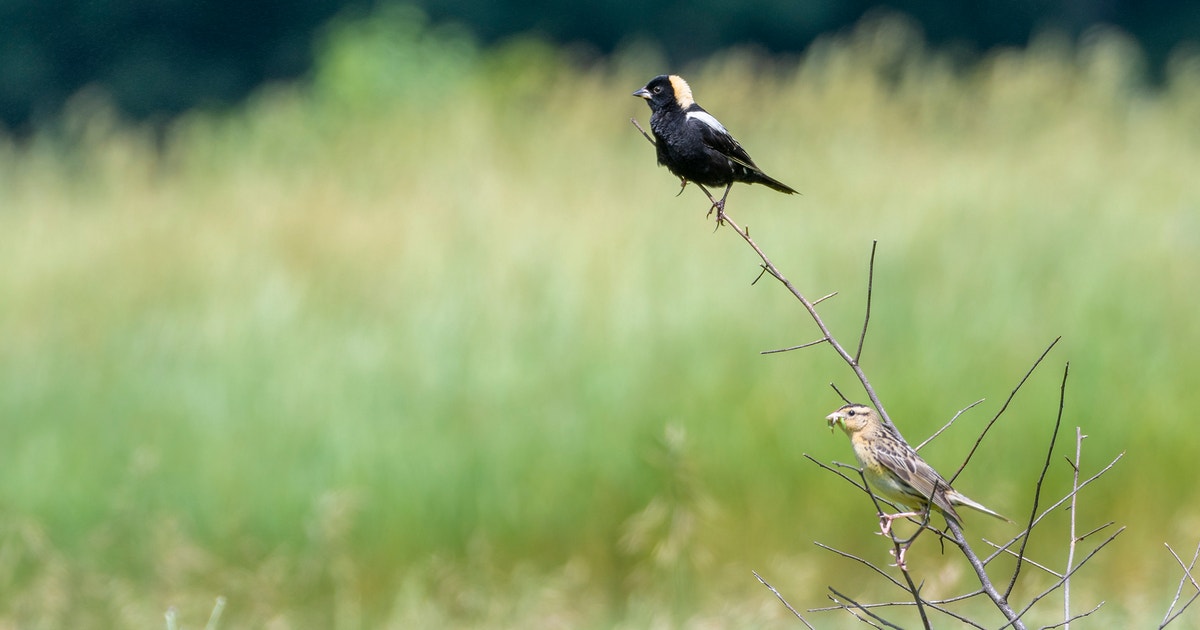
Bouressa’s 360-acre farm sits inside Wisconsin’s Forest Transition Zone, an space previously dominated by timber that has reworked into grasslands and agriculture. Grass-based farming operations on this space can present important habitat for precedence grassland species, together with Jap Meadowlarks, Savannah Sparrows, Bobolinks, Dickcissels, and Grasshopper Sparrows. In partnership with Audubon, Bouressa enhances habitat variety on her farm via rotational grazing, reconnecting grasslands, and restoring beforehand drained wetlands.
“Since working with Audubon, I’ve added a wildlife lens to all my habitat administration choices, managing for a mosaic of various grass heights that completely different chicken species have to thrive,” Bouressa mentioned. “I’ve seen the impression and success of managed grazing and tree line elimination on my farm with the return of nesting Bobolinks. Now I see birds throughout the entire farm, my emerald oasis surrounded by cropland.”
Bouressa is a pacesetter in regenerative agriculture in her group, internet hosting occasions and connecting with different producers to share her experiences with adaptive grazing and its advantages for wildlife habitat, soil well being, and dealing lands. Bouressa additionally serves on the Wisconsin Pure Sources Board and is director-at-large on the Wisconsin Farmers Union Board. When working with different group members, she shares how prioritizing conservation as a substitute of manufacturing on a number of acres of her farm has helped her progress towards her targets.
“I’m fortunate to have sufficient land that I needn’t max out manufacturing on the expense of habitat,” Bouressa mentioned. “I wish to display that we are able to have productive agricultural programs whereas additionally defending and prioritizing our pure assets.”
By turning into licensed via Audubon Conservation Ranching, Bouressa Household Farm joins a rising community of producers dedicated to conservation on their farms and ranches. These producers use the Fowl-Pleasant Land Certification seal on their beef and bison merchandise, now discovered in additional than 2,000 retail shops throughout the nation, speaking to customers that their purchases assist habitat conservation.
About Audubon Conservation Ranching
Audubon Conservation Ranching companions with ranchers to maintain wholesome grasslands, plentiful birdlife, and resilient rural communities. By means of our bird-friendly land certification and science-based method, we empower land stewards to reinforce habitat, enhance soil well being and water high quality, and strengthen the connection between conservation and ranching. By buying merchandise from Audubon Licensed Fowl-Pleasant Land, customers grow to be conservationists, serving to defend America’s grasslands and the birds, wildlife, and those who rely upon them. For extra info, go to www.audubon.org/ranching.
